MURY TROI 16.07–27.09.2026
Opisana w starożytnych eposach historia oblężenia i zdobycia Troi stała się źródłem wielu mitów, które są archetypiczne dla europejskiej, zachodniej kultury. Stanowi fundament zachodniej cywilizacji. Z opowieści wyrasta m.in. mit niezłomnego miasta, twierdzy bohatersko bronionej przez swoich obrońców na przekór przeważającym, a nawet nadludzkim siłom wroga; mit szlachetnego bohatera, który oddaje życie dla swej ojczyzny; mit proroków i ich daremnych ostrzeżeń przed niebezpieczeństwem; mit solidarności obrońców i przewrotności bogów sprzyjającego raz jednej, raz drugiej stronie. Wreszcie mit skuteczności podstępu, który pozwala wtargnąć do miasta pod pozorem daru, by zrównać je z ziemią.
Mit Troi można odnieść nie tylko do historii poszczególnych miast, m.in. Warszawy, ale do całej europejskiej cywilizacji. Troja w stanie oblężenia, to także symbol atakowanej kultury, do której opanowania atakujący nie wahaj się użyć różnorakich podstępów, jeśli zewnętrze mury wspierane bohaterstwem obrońców nie chcą ustąpić. Mury Troi to front, który może przebiegać w umysłach i duszach ludzi.
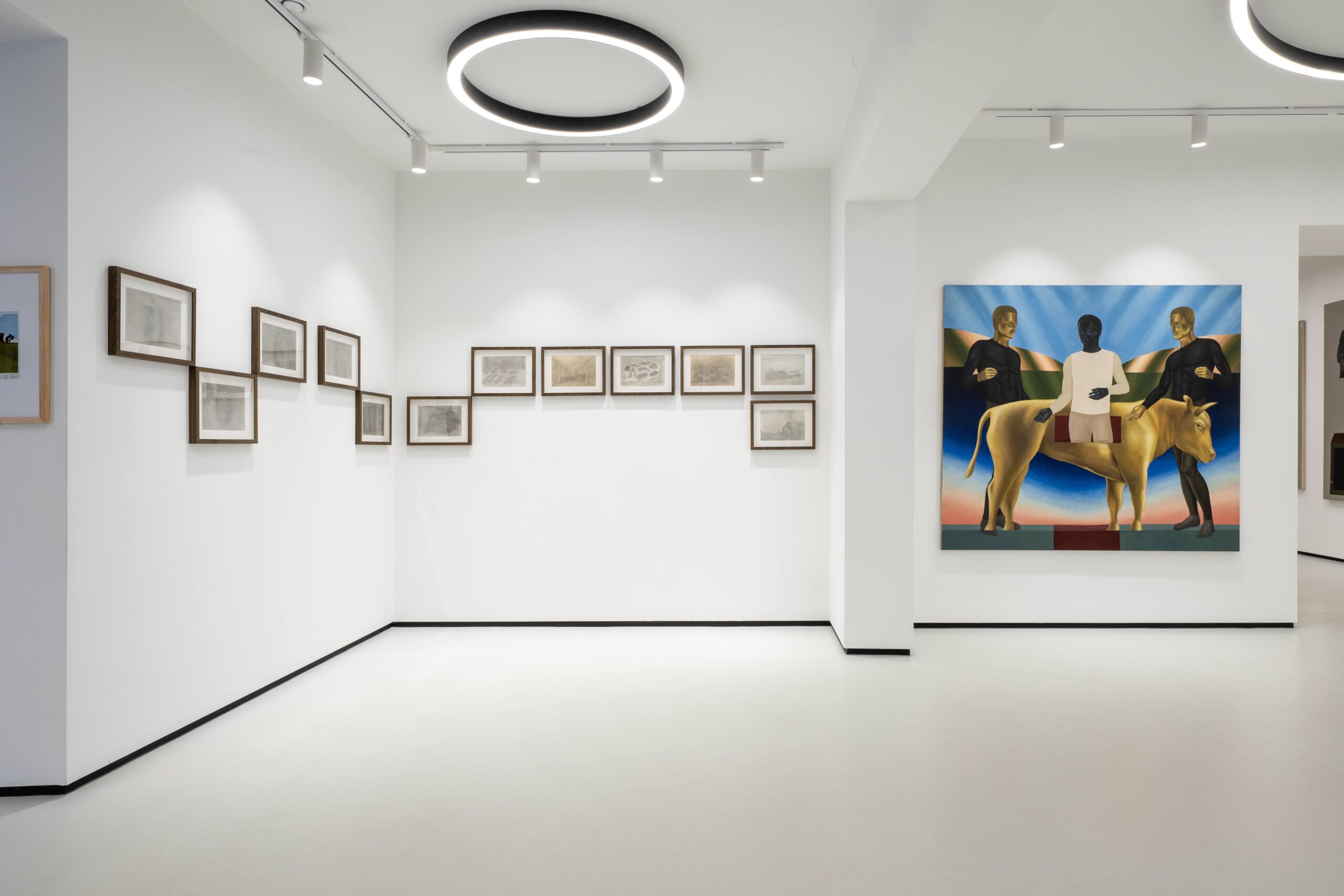
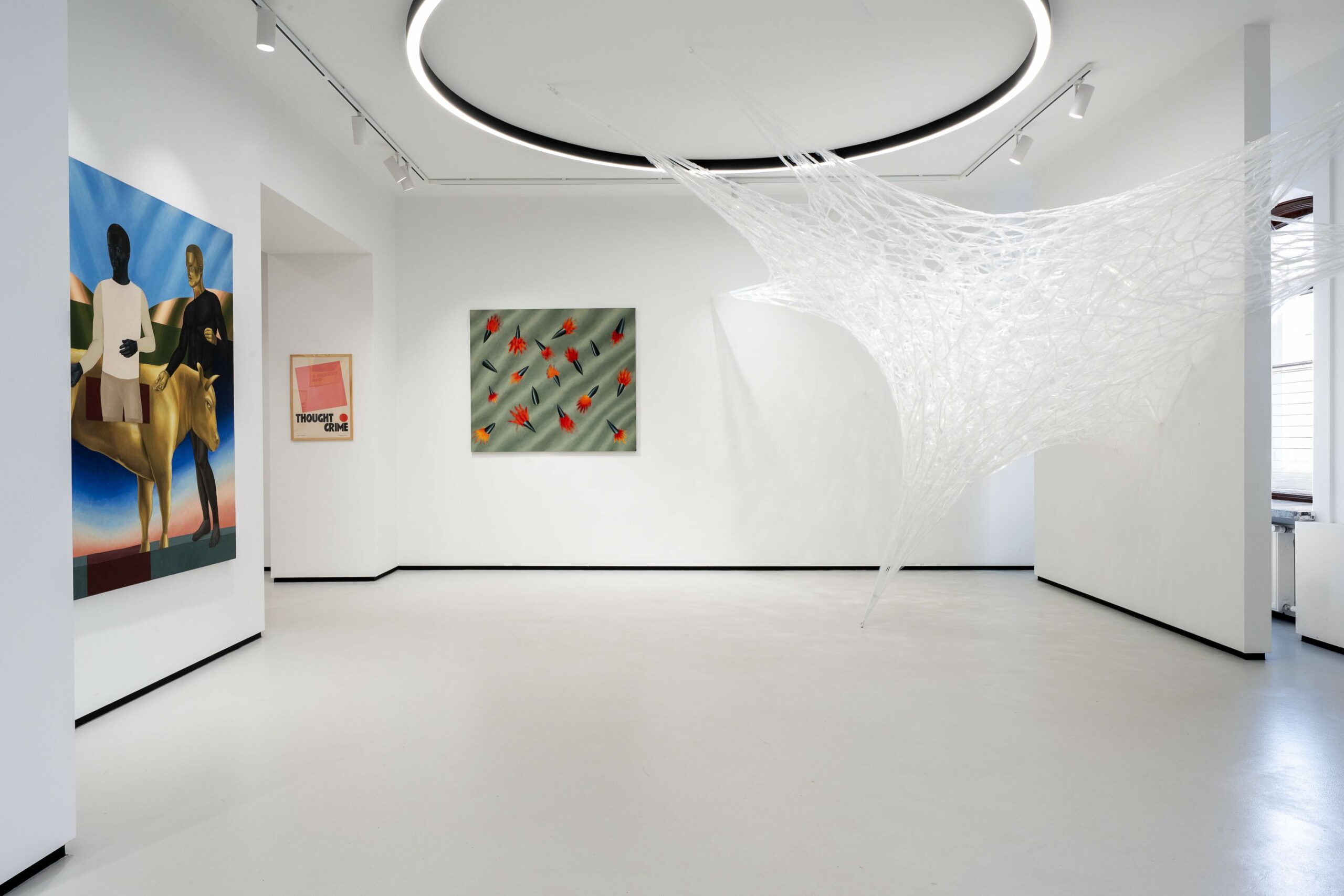
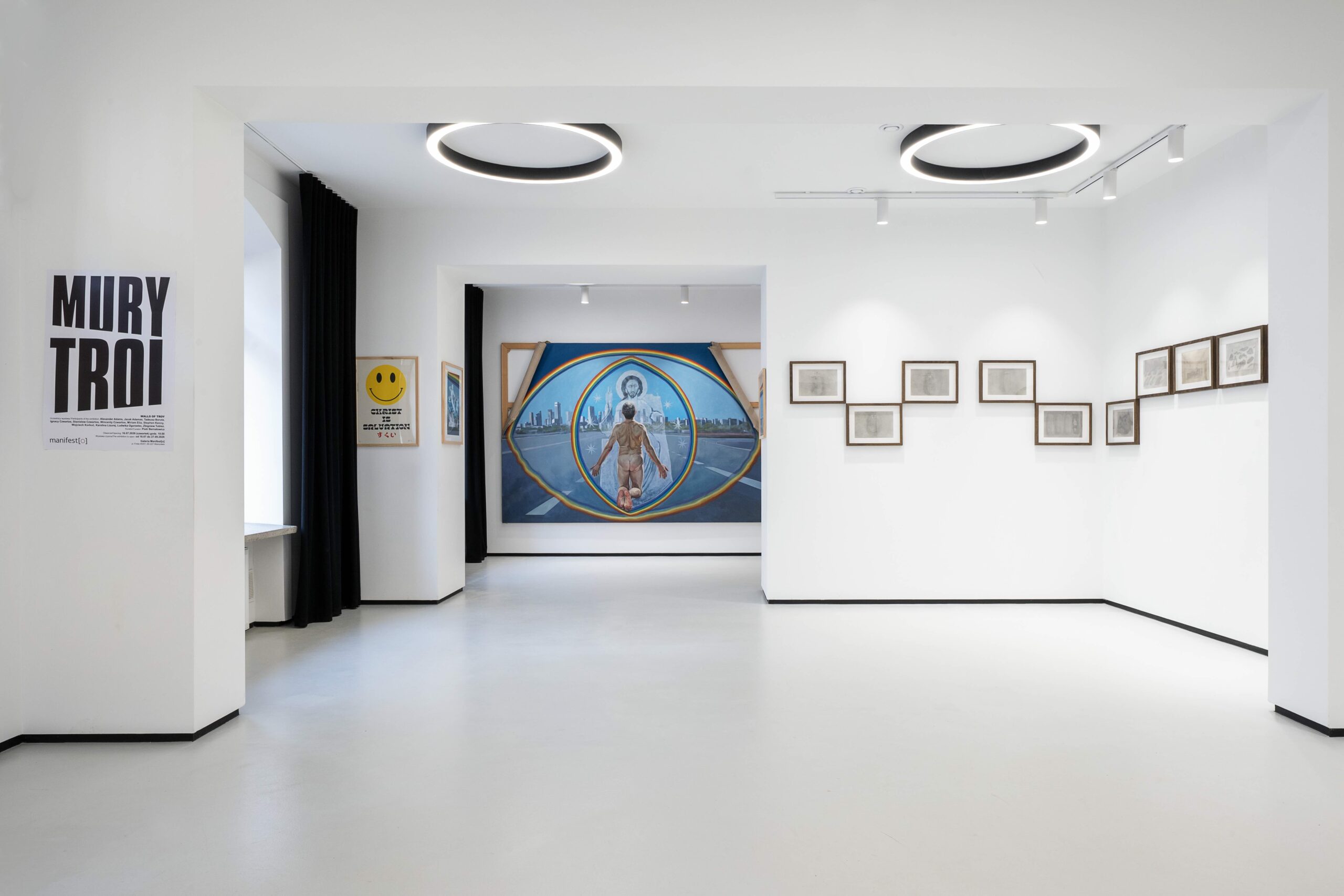
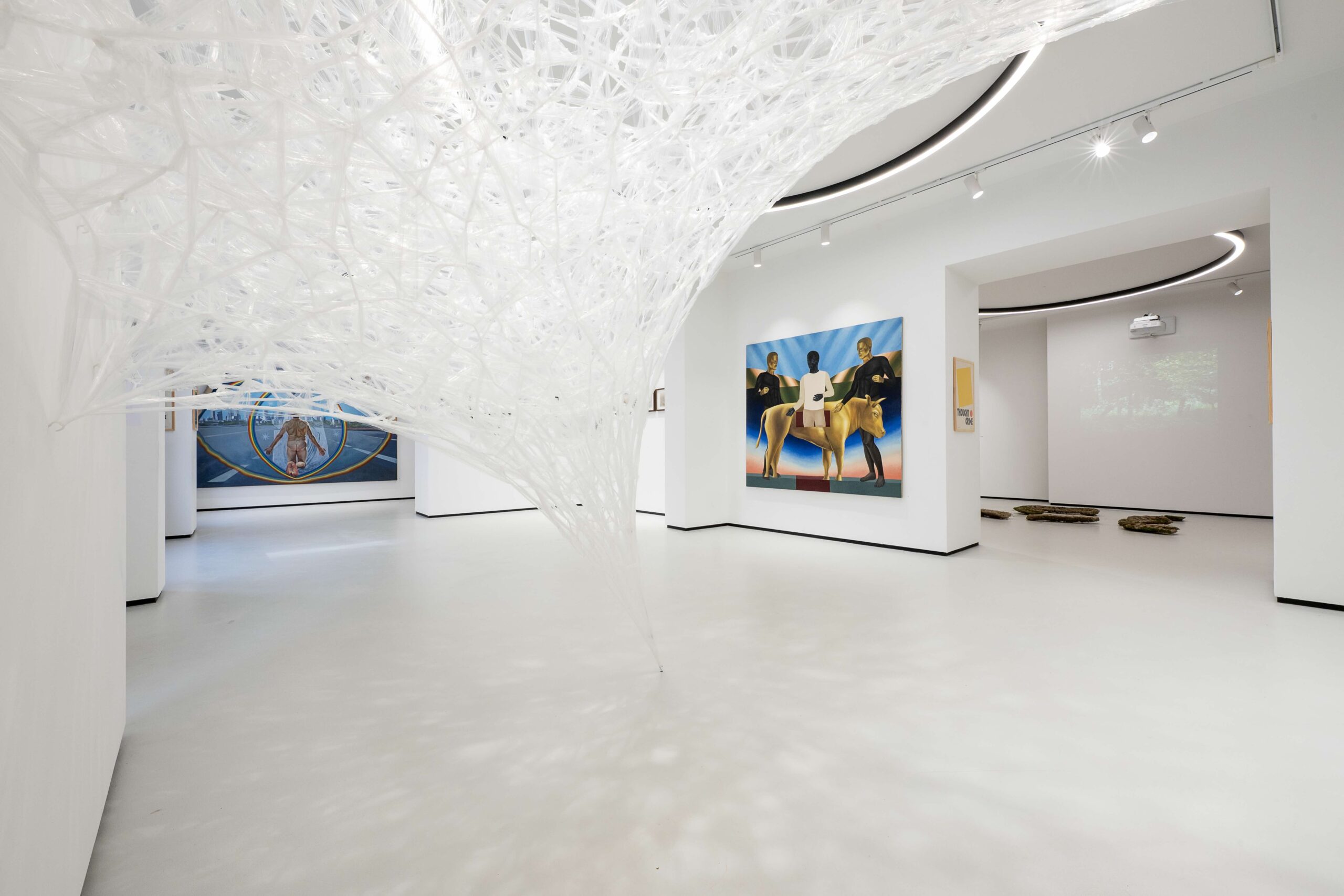
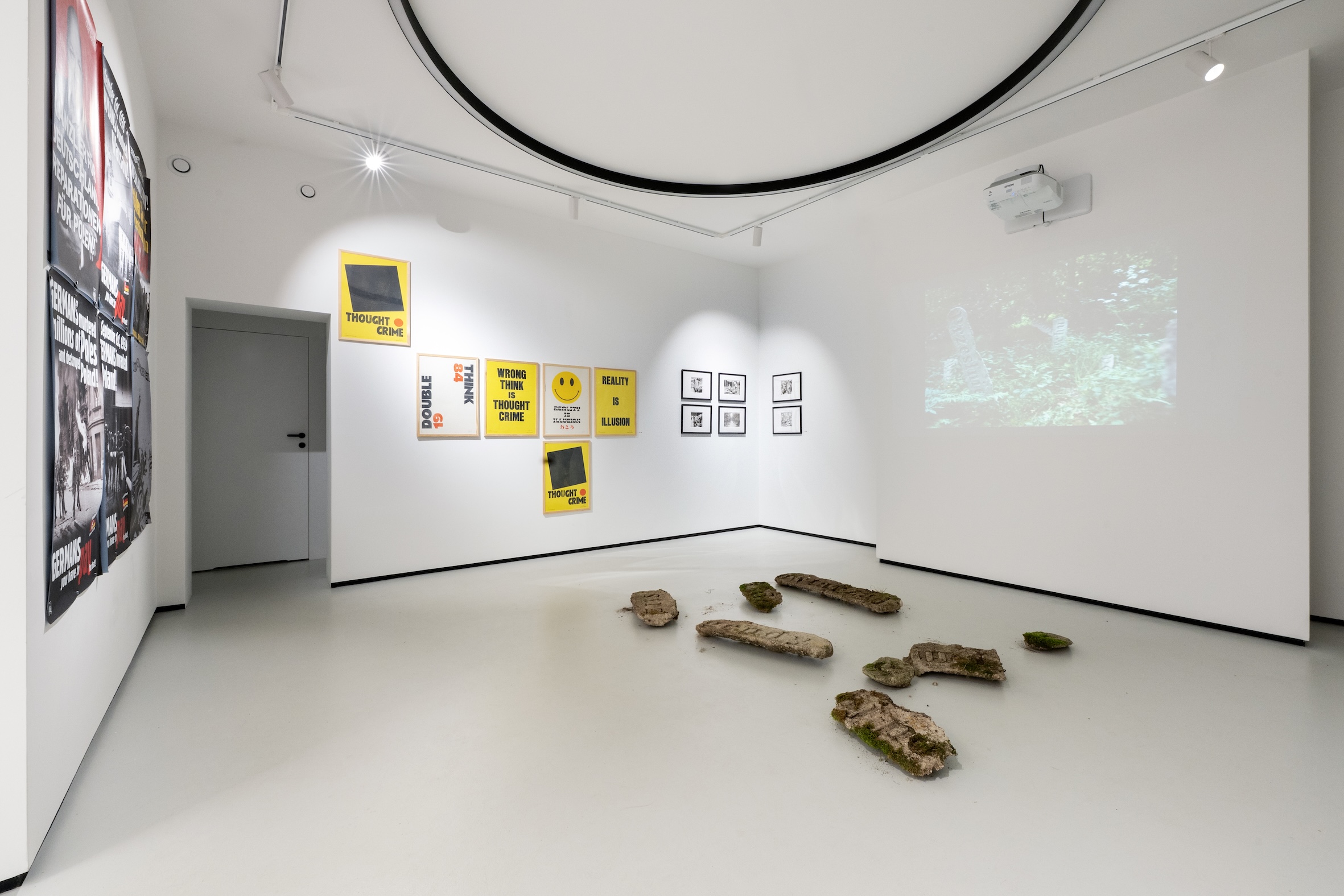
Wystawa „Mury Troi” w Galerii Manifest[o] ukazuje prace artystek i artystów, które traktować można jako aktywizację rozmaitych wątków dawnych opowieści i odnieść je do naszego tu i teraz: do historii Warszawy i Polski, ale można też postawić szersze pytania o aktualność dawnych opowieści w kontekście dynamicznych przemian współczesnego świata i kryzysu cywilizacji Zachodu.
W wystawie biorą udział: Jacek Adamas, Alexander Adams, Tadeusz Boruta, Ignacy Czwartos, Stanisław Czwartos, Wincenty Czwartos, Miriam Elia, Stephen Kenny, Wojciech Korkuć, Karolina Lizurej, Ludwika Ogorzelec, Zbigniew Tubisz.
The story of the siege and capture of Troy, as described in ancient epics, became the source of many myths that are archetypal for Western European culture. It forms the foundation of Western civilization. From this narrative emerges, among others, the myth of the unyielding city—a fortress heroically defended by its protectors against the overwhelming, and even superhuman, forces of the enemy; the myth of the noble hero who gives his life for his homeland; the myth of prophets and their warnings unheeded by their fellow citizens; the myth of the defenders’ solidarity and the trickery of the gods who favor first one side, then the other. Finally, the myth of the effectiveness of deception, which allows entry into the city under the guise of a gift, only to level it to the ground.
The myth of Troy can be applied not only to individual cities, but to an entire civilization and culture. Troy under siege is also a symbol of a civilization under attack, where the aggressors do not hesitate to use various ruses to conquer it if the outer walls, backed by the heroism of the defenders, refuse to yield. The walls of Troy represent a frontline that can also run through the minds and souls of people.
The exhibition „The Walls of Troy” at the Manifest[o] Gallery presents the works of artists who activate various threads of these ancient tales and relate them to our here and now: to the history of Warsaw and Poland, but also more broadly, raising questions about the relevance of ancient stories in light of the dynamic transformations of the modern world and the crisis of Western civilization.
Artists: Jacek Adamas, Alexander Adams, Tadeusz Boruta, Ignacy Czwartos, Stanisław Czwartos, Wincenty Czwartos, Miriam Elia, Stephen Kenny, Wojciech Korkuć, Karolina Lizurej, Ludwika Ogorzelec, Zbigniew Tubisz.