SŁAWOMIR MARZEC. 9.04 – 24.05.2026
IN THE HORIZON
At Sławomir Marzec’s exhibition at the Manifest[o] Gallery, we present the artist’s latest paintings from the series “In the Horizon.”
The artist works in series in order to—as he himself writes—avoid definitive images and to capture the finality of formative, archetypal images. The paintings form collections, which in turn come together into larger wholes based on a reflection on a chosen painterly or visual problem. Since 2019, the horizon has become this key issue for the artist: the horizon as an opening of space, as a dissolved, gaping boundary of space. The horizon as an end, an irrevocable gaze, an anti-map—writes the artist.
The first series, simply titled “Horizons,” consisted of canvases constructed, as Bożena Kowalska wrote, from countless points of color—almost identical, yet not identical—with forms appearing on them that deceptively manifest and vanish inexplicably. The horizons were made visible through a dense concentration of colorful particles—microforms covering the surface—creating the impression that it recedes into the depths or undulates. The artist did not title the individual paintings; he simply numbered them. The titles, often written in Latin ( “For Lorraine. Noli me tangere,” “Coincidentia oppositorum”), appear in the subsequent series: “Horizons II.” In these paintings, the nebula of multicolored specks shrinks and thickens, revealing large swaths of white canvas. The titular horizon dissipates into whiteness, glowing in a narrow slit between dark forms. In the next series, “Horizons—Suddenness,” pointillist meticulousness gives way to expressive, broad brushstrokes. In “Horizons—Close-ups,” the horizon line seems to extend beyond the canvas, while its course within the painting’s boundaries is visible through cracks in the white paint covering the canvas’s surface.
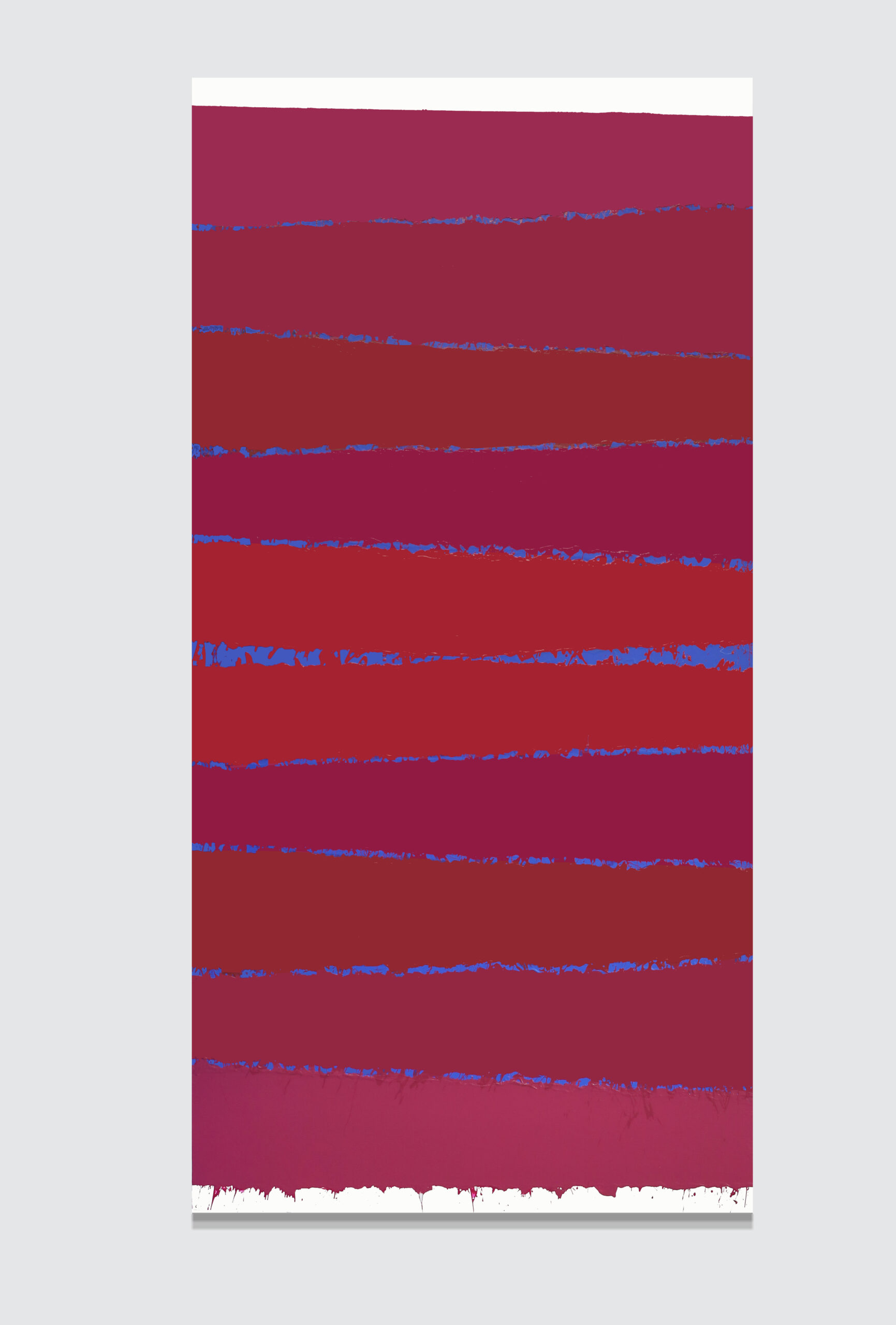
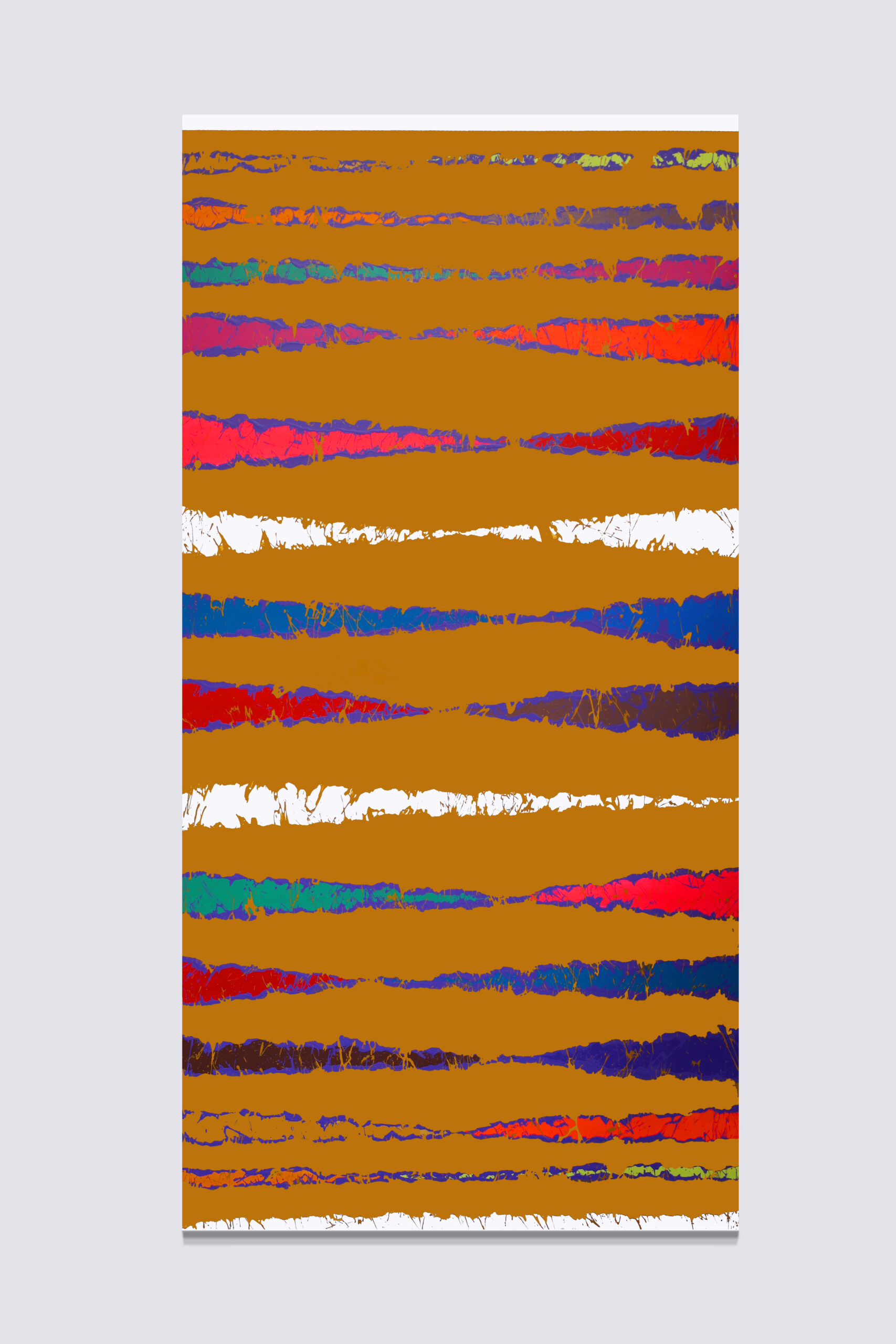
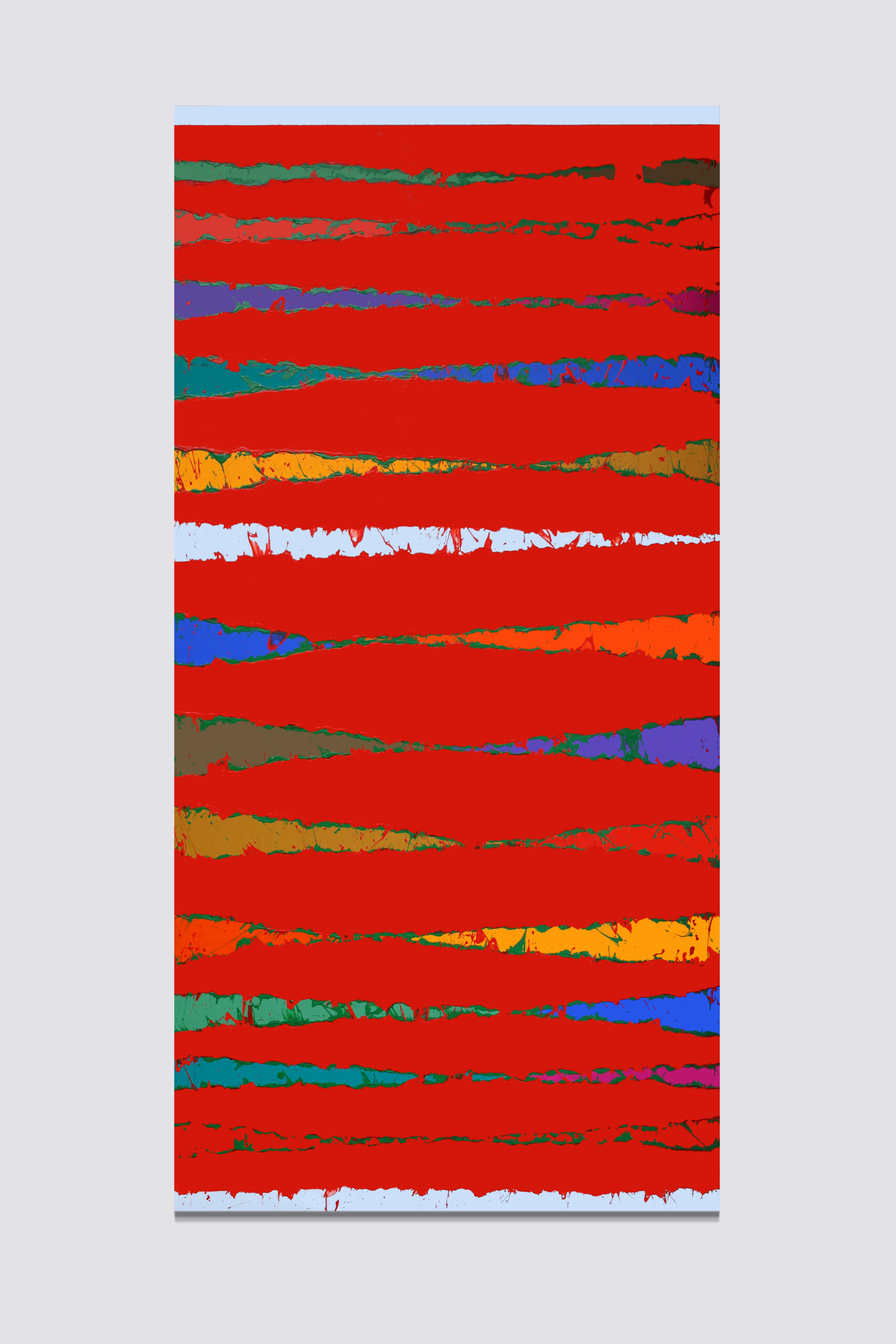
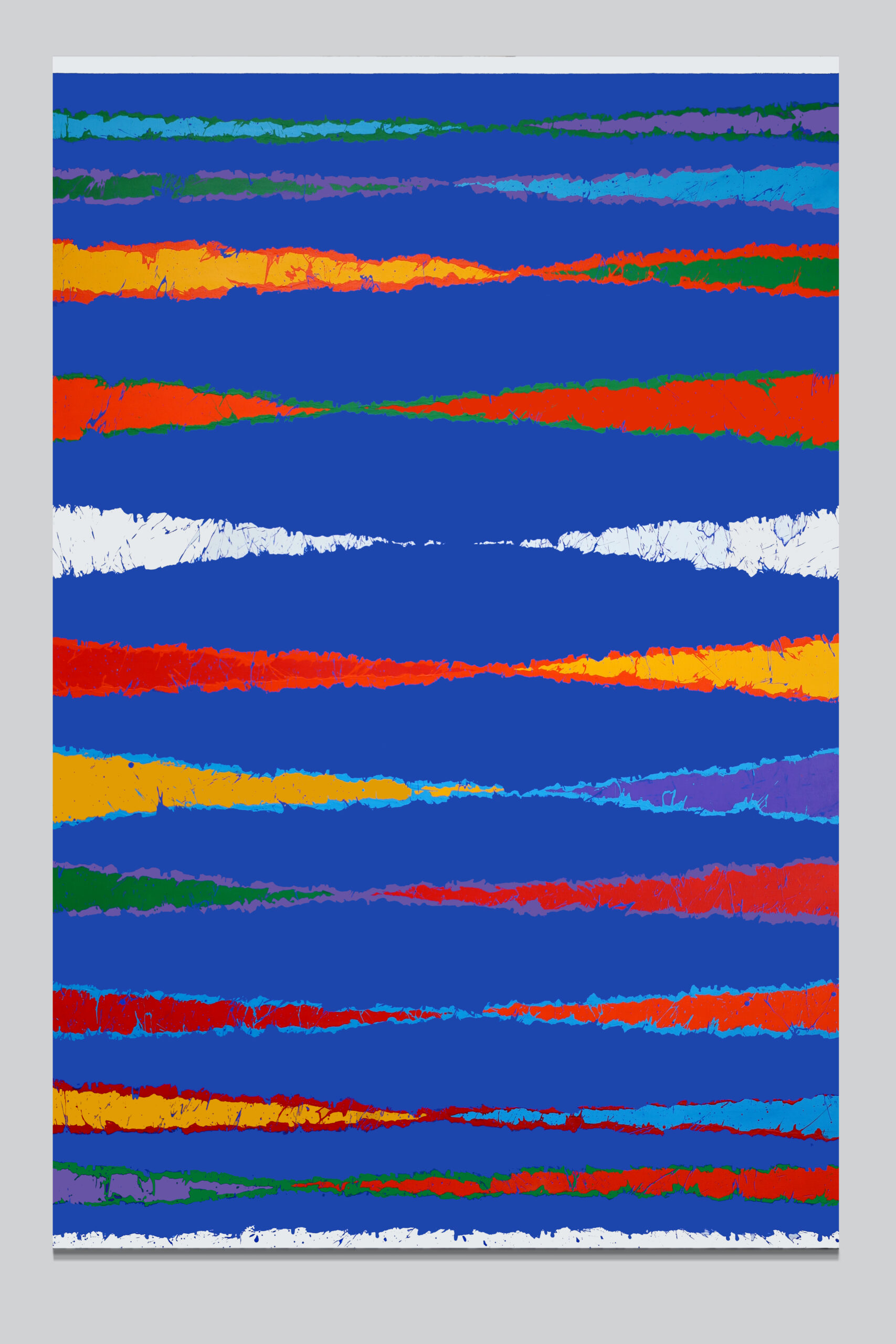
In his latest series, titled “In the Horizon – Color,” presented at the Manifest[o] exhibition, the painter departs from the pointillist method. Uniform planes of color are intersected by lateral wedges of contrasting colors—these can be interpreted both as traces of the horizon and as multiple horizons. The issue of the horizon as the marker of the limit of our gaze—which constructs space within the painting—has been combined with the issue of color contrasts and harmony as the foundation of the canvas’s composition—a question at the heart of the modernist breakthrough in painting. A new dimension also emerges in this series: the dimension of memory and dialogue. Sławomir Marzec dedicates selected paintings to his deceased fellow painters, including Zbigniew Gostomski and Tomasz Ciecierski. Marzec draws on his colleagues’ characteristic palettes or compositional motifs, effectively incorporating them into his own compositions, though one could view this differently—as a surrender of part of his own series to the control of other painters.
This series is complemented in the exhibition by groups of paintings titled “In the Horizon—White” and “In the Horizon—Abysses,” in which color fades away. The first group consists of white monochromes with varied textures; in the other group of paintings, black dominates, effectively pushing color toward the upper and lower edges of the canvas. The connecting element is the ever-present horizon line.
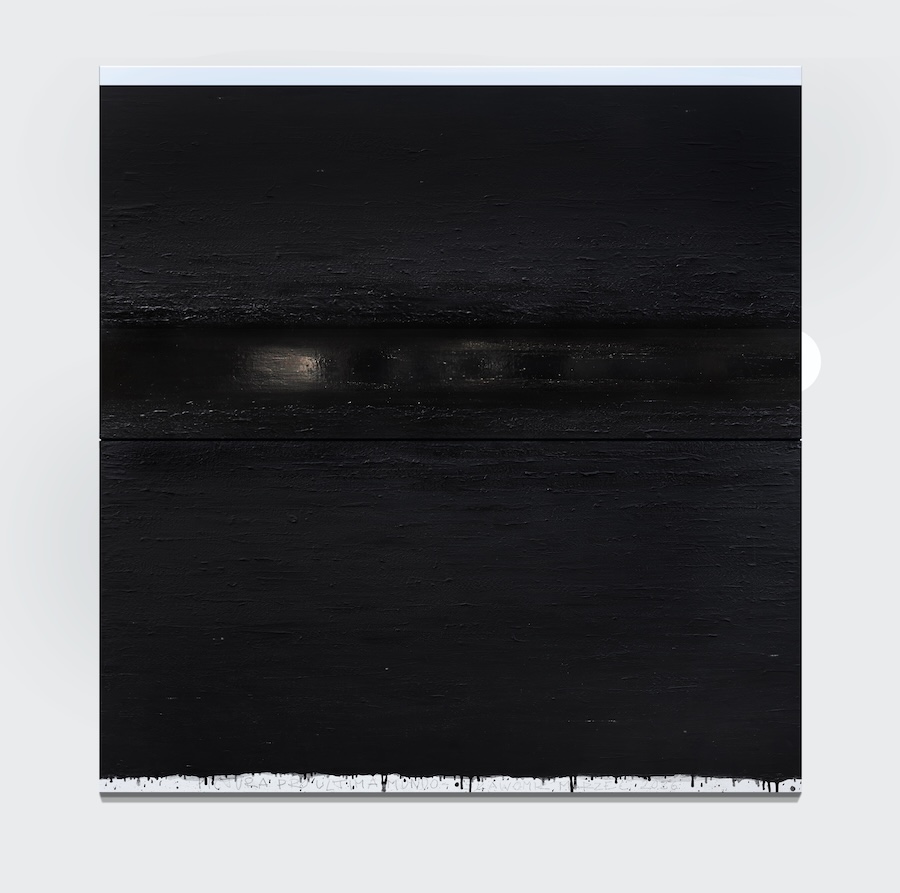
The culmination of the exhibition is the painting “Pro ultimo Mundo.” It is a large-scale (180 x 180 cm) black monochrome composed of two stretchers. The horizon line, which runs above the junction of the two canvases, is accentuated by a smoother application of successive layers of black paint than in the rest of the canvas. The black in this area becomes particularly deep. It creates space within the painting and, paradoxically, seems to emanate a mysterious light. The horizon, as the limit of vision, takes on the significance of a path leading toward transcendence in this painting.
Marzec’s painting cycles resemble metacycles that coalesce into larger wholes; they are like chapters of a philosophical treatise rendered in paint. Drawing on the tradition of the twentieth-century avant-garde, Marzec often accompanies his paintings with complex, theoretical commentary. However, as he himself points out, his paintings are not illustrations of theses formulated in language—they are rather a sensual, visual counterpart to verbalized thought that cannot be translated into text. Reflection on the essence of the horizon is, par excellence, a reflection on the issue of untranslatability, autonomy, and even the primacy of visual thinking. The phenomenon of the horizon can be experienced only through sight; in reality, it does not exist. It is only from a quality derived from observation that clusters of abstract concepts and symbolic meanings can emerge. By focusing on the theme of the horizon, Marzec touches upon the genesis of thought emerging from visual experience, which seems to be at the beginning. Hidden within this is the thesis that in the beginning there was the eye and vision. Perhaps beyond the horizon of vision, only the Word remains.